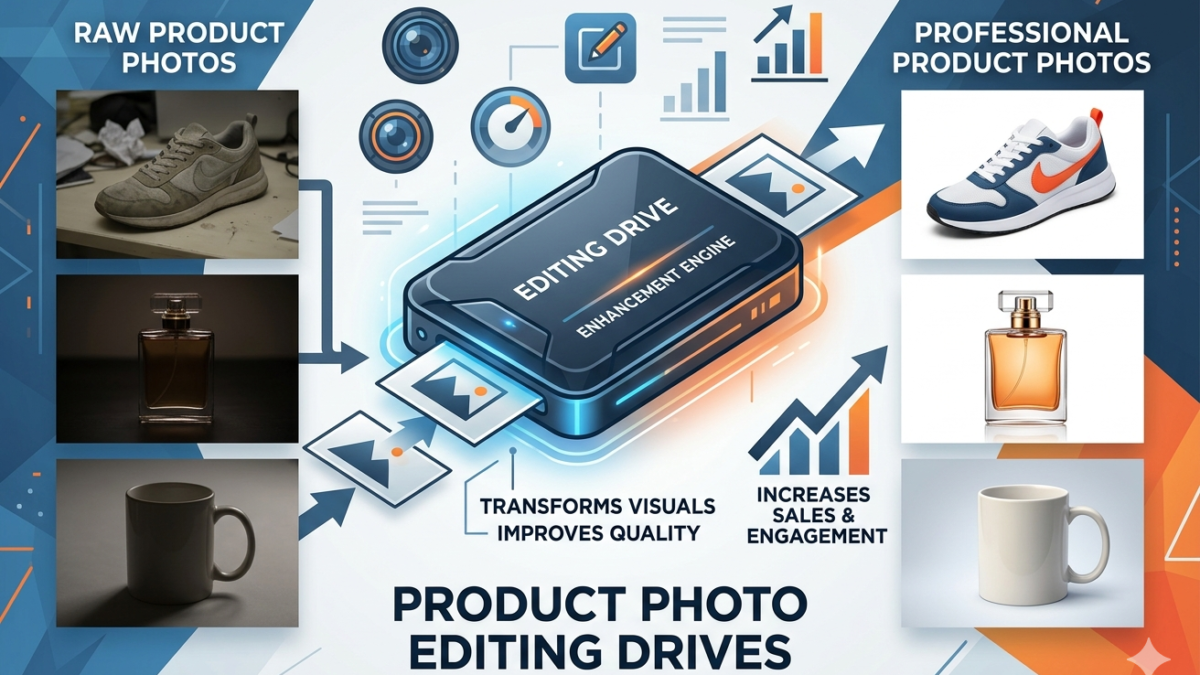
Amazon’s image requirements and the areas in which buyers of the e-commerce platform relate to the product. Basically, by taking these two factors into account, photo editing drives sales here.
How bold, how sharp, and how close to the real thing the product is presented to the audience is always a major concern. With time, AI has taken image editing to a unique level, but the quality control is still in your hands.
Sit back, today’s blog is going to reveal to you the most effective factors that Amazon photo editing services emphasize to increase sales. Let’s get started. nothing2hide, programgeeks, ustudiobytes
TL;DR:
- The set for mobile view takes into account the clean white background of the product so much that just keeping the original color intact can convert your audience into buyers.
- You can use AI to quickly enrich Amazon listings with infographics and real-life product photos, but you have to be in control of the quality yourself.
Overview: What Factors Does Photo Editing Focus on for Sales?
| Factors that photo editing gives importance to | How it makes the stage for sales conversion |
| Spotless white background | By omitting audience confusion |
| Mobile-ready view | With easy access, even on the go |
| Restoring original color | Through product validation |
| Product infographics | By providing visual learning to the audience |
| Human + AI system | Through high-quality and comprehensive visuals |
| Products in real life | By making the audience connect with the product |
Uncompromising White Background
Amazon did not make a completely blank white background their condition by any chance. The main reason behind this is that it results in a kind of product display, which leads to sales growth for store owners.
Even if there is a slight gray color or shadow in the backdrop of the hero image, it causes confusion for the viewers, so logically, they try to look for something else. In continuation of this impression, the Amazon search engine responds frankly by hiding the product from the search results.
Photo editing, especially clipping paths, removes the background and other distractions and makes the product the center of attraction of the image.
Mobile-ready Product View
If you look around you, you’ll quickly notice how mobile-first online shoppers have become. Even though the screen is small, the product covers the entire screen in a way that shoppers can comfortably see their desired product.
Image editors here take into account the resolution of the product image, the mobile screen ratio, and bring the cropping tool into action.
What factors does the smartphone-first experience stimulate that lead to sales?
- Easy to tap when carried in one hand: Even though the screen is small, visitors can test the product by simply tapping on it.
- A quick clarification: Potential buyers can understand in milliseconds what exactly the customer is going to sell.
- Distraction-free visuals: Seeing a clean image on a small screen from anywhere in the world increases the confidence of buyers and so brand recognition.
Restoring the Real Look with Color Matching
As an eCommerce business owner, you can’t take any chances with the actual and on-screen look of the product. Even if there is a slight anomaly in the color or texture, buyers don’t think twice about returning the product.
This pain point unabashedly declares how important color adjustment is for product photos to get the final sales conversion. Today’s leading online stores rely on professional image retouchers to consistently show the real components of their products in the photos.
Product Info on Secondary Images
Visitors want to learn more about a product in addition to its crisp look; not by reading extensive descriptions, of course, but through visual learning. You’re probably aware of the popularity of infographics, especially those that provide a quick overview of the product.
Here, photo editors play a key role in ensuring that the right text is clearly placed around the product in a clutter-free manner. Then, a variety of relevant symbols, icons, and shapes play a role in the product labeling, which helps you easily understand what the product can do.
According to Olivia Martinez, who has been in the business of Amazon products for 12+ years, “infographics require optimal placement of text, graphics, and products.”
“A sharp example of this synchronization”, she adds, “can be seen in the photo editing of Retouching Zone, who maintains sufficient proportions in the distribution of space within the image.”
An Efficient Balance Between Humans and AI
AI editing has made Amazon photo editing services faster than ever before, allowing you to work in large volumes. But the competition is really about quality results, and that’s why wise editors add a human controller to their workflow, who checks to see if any images look unnatural or have AI-induced errors.
The benefits you get out of this double-layer workflow:
- The unnatural items that AI often adds can be removed.
- Text distortion and unwanted spots or other flaws can be fixed
- Over-polish, wrong colors, and messy shadows caused by false reflections can be corrected.
Showing Products in a Real-life Context
When your product gets lifestyle compositing, viewers feel a connection with it, which ultimately converts them into buyers. Amazon-based photo retouchers are increasingly turning to virtual staging, where the product gets a physical location or body.
You can instantly capture this experience with virtual try-ons, a lifestyle bridging where the buyer gets the feeling of physically checking out the product. For this, there is no substitute for high-quality visuals, where skilled photo retouching comes into play.
Frequently Asked Questions about Amazon-based Photo Editing
1. Is white background mandatory for uploading product photos to Amazon?
Yes, white backgrounds are included in Amazon’s image guidelines. If you upload your product photos without following them, the ecommerce platform will hide them from its product search results.
2. How does mobile-first experience set the stage for driving sales on Amazon?
In this experience, visitors can easily view and verify products in the e-commerce store from anywhere, in any situation, and quickly reach a purchasing decision.
3. How does color matching reduce product returns?
Sometimes the color of a product displayed on the screen does not match the real color. So image editors restore the original color of the product through color matching. This ensures that customers receive the product in the exact color they ordered online and avoid having to return the product for good reason.
4. Which product photos can I add text and icons to in addition to the product for listing on Amazon?
Along with the product, you can add text and various icons, infographics as a whole, to the secondary photos that serve as references to the main image (hero image) of the product.
5. How do customers see the product in virtual staging?
Through virtual staging, customers can see a 3D view of a product in an empty room (such as furniture) or while it is being worn by an AI-created model (such as clothing).
Wrapping Up
These are the trendy ways how product photo editing drives sales on Amazon and which are still effective in 2026. Optimize your photos for mobile, and see how well their white backgrounds work, and even your color matching will blend in with it to give you high quality.
Thanks to AI, you don’t have to worry about providing your Amazon listings with an enriched library of infographics and real-life surround images. But still, you must retain ultimate control to maintain quality.